01 / Inside the current build
Explore the world, not just the next objective.
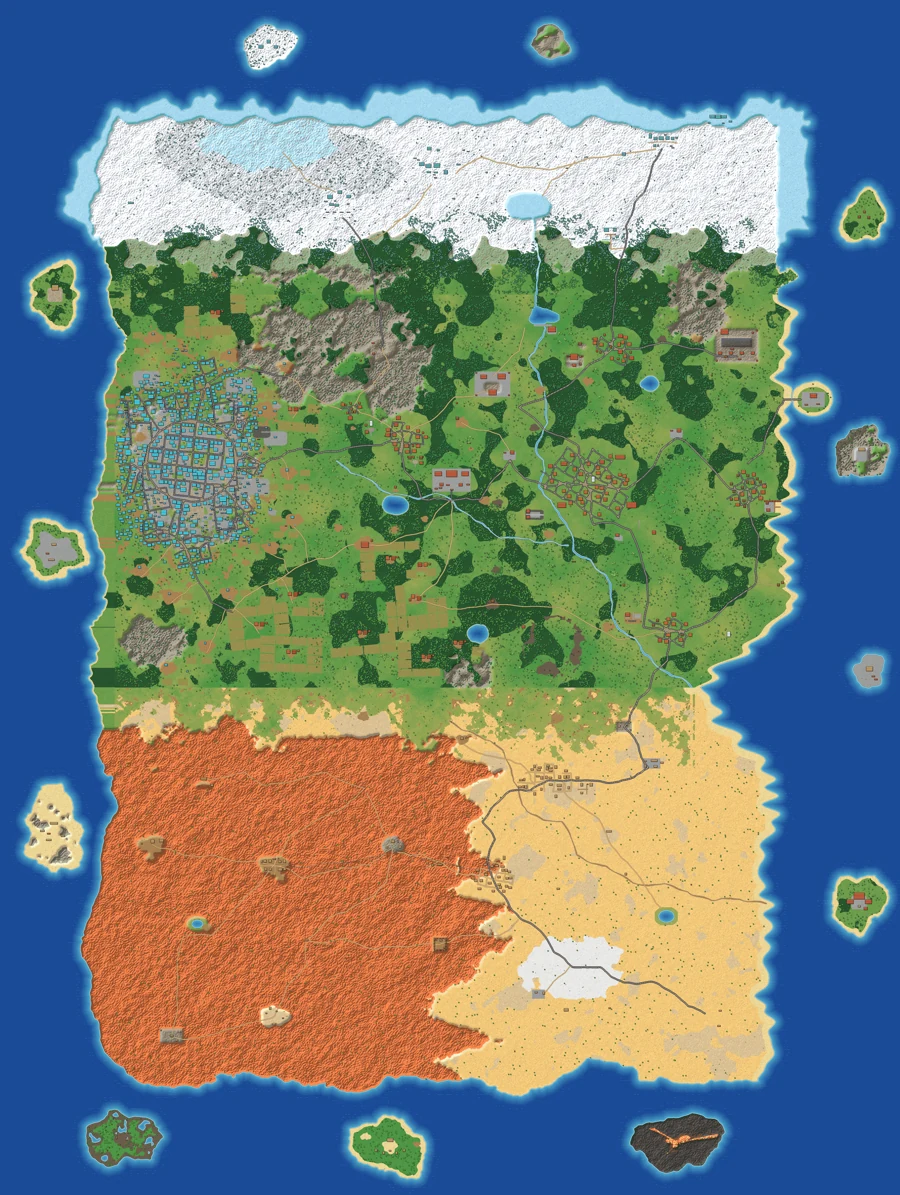
The mainland connects Ridgewood's streets, small towns, farms and dense woodland with the coast and a large southern desert. Neo-Vale changes the scenery again with industrial districts, neon signs and rain-soaked streets. In the north, taiga and snowfields lead to frozen lakes, glaciers and Aurora Refuge.
The world also has a ring of twelve offshore islands. A monastery, prison, ship graveyard, naval base, laboratory and volcanic crater each give you another reason to leave the mainland. Roads, landmarks, hidden stashes, notes and lookouts reward detours; the map reveals areas as you discover them.
02 / Inside the current build
Two protagonists. Nine allies.
Choose Akashi or Satoshi before starting a new game. Both combine ranged spells with close combat, but their elements and techniques lead to different builds. The other protagonist can join as the second player in local co-op.
Rex brings a rifle and explosives; Kenji relies on fast sword attacks; Claire drains life and controls infected servants. Brutus throws enemies, Nina sets up turrets, and Wade fights alongside Sparky. Cole, Tony and Ivy add ricochets, a chainsaw and long-range fire to the party.
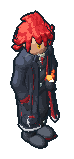
Fire, water and the void
Akashi
Akashi fights with magic at range and a blade up close. Fire, water and void spells share his skill tree, while sword hits and parries help restore mana. His coat and hair use the original wind-animated frames shown here.
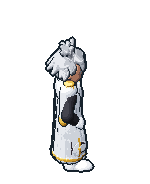
Ice, wind and light
Satoshi
Satoshi can chill and freeze enemies, pull them with wind and use light for protection. His default right-click technique is a three-strike sword combo. The animation below plays the original slash1, slash2 and slash3 frames in order.
Original game sprites. Animation pauses offscreen and respects reduced-motion preferences.
The people you recruit
Nine allies join the chosen protagonist through the campaign. You can switch heroes and keep building the party; each has its own combat style.


03 / Inside the current build
Use magic at range and steel up close.
Mouse attacks are the starting point. Akashi can throw fire, shape water and pull a crowd into a black hole; Satoshi works with ice, wind and light. Their blades consume stamina, while spells spend mana. A melee hit can help pay for the next spell, so switching distance is part of the fight.
Guns, crossbows, punches, traps and turrets give the recruited heroes different roles. Dodges avoid attacks, parries reward timing, and heavy hits shove bodies and loose objects. Fire, freezing, poison and shock can also come from equipment, with visible changes to attacks and enemy deaths.
04 / Inside the current build
Choose what each button does.
Heroes begin with their mouse attacks. Skill points unlock Q, E, R and F, improve attacks and open build paths. The HUD only shows abilities you have unlocked, so a new hero does not start with every skill available.
The protagonists can assign alternative spells to the same button. Akashi's tree supports fire, water, void and blade builds; Satoshi has ice, wind and light options. Other heroes have their own branches and technique variations. You are choosing an attack pattern and resource loop, not just adding damage to every stat.
05 / Inside the current build
Equipment changes the fight and the silhouette.
Loot fills eight slots: weapon upgrade, head, armor, gloves, boots, backpack, belt and accessory. Compare a new item with the equipped one before replacing it. Higher-rarity pieces can add effects such as burning hits, chain lightning, freezing, piercing shots or a combat drone.
Biome sets reward wearing matching pieces. The Polar set combines cold protection with freezing effects; Kaizen equipment adds drone support. Unique boss drops and hero relics give more specific bonuses. Wearable pieces also appear on the character, including headgear, coats, boots and backpacks.
06 / Inside the current build
Put your scrap to work.
Shelter workshops turn scavenged scrap into permanent upgrades, supplies and equipment improvements. Reforging gives you a way to work on a promising piece instead of waiting for a replacement. The item panel shows what you are changing before you spend the resource.
Scrap also matters away from the workbench: merchants, medicine and other services compete for the same supply. A good haul can support a new build or prepare you for a longer trip. Boss loot, contracts, stashes and salvage feed that loop.
07 / Inside the current build
Follow a story, then take a detour.
The main questline connects the outbreak, towns, rescued heroes and Hélix. Most regional missions can start when you reach their location rather than forcing you through every earlier task. After a detour, the tracker can return you to the main story.
Shelter jobs, contracts and parallel sagas add rescues, supply recovery, named elites, nests and local stories. Defense and area-clearing objectives use enemy waves; escorts and generator objectives give those fights a purpose. Conversations and the journal let you track what you accepted instead of relying only on a waypoint.
08 / Inside the current build
People still live behind the walls.
Shelters are safe places with different layouts, residents and services. Hopewell has its own village life; Port Haven opens toward the sea; Aurora Refuge sits in the snow. Mechanics, merchants, doctors and notice boards support the trips between them.
Caravans, scavengers and patrols travel the roads and can need help. The honor system records how you treat them: rescuing people or robbing travelers changes prices, help from patrols and how shelters or raiders respond. Camps outside the walls can come under attack, so an encounter can leave a consequence in the world.
09 / Inside the current build
A crowd is not the same as a boss.
Runners close distance, spitters pressure you from range, shields punish frontal attacks and screamers draw more infected into a fight. Regional enemies change the mix again. Elites carry stronger threats and better loot; bosses mark major attacks before committing to them.
World events interrupt the route with danger or a reward. Fighting builds threat and can trigger a Fury Wave. Blood-moon encounters, nests, ambushes and guarded treasure keep exploration from becoming an empty walk between quest markers.
10 / Inside the current build
Watch the light change over the snow.
The game moves through blue predawn light, warm sunrise, bright midday and evening color. The sun and moon change the direction and length of shadows. Lamps, fire, spells and city signs give their own light to a night scene.
Weather changes gradually. Rain, fog, wind and storms alter the atmosphere and visibility; northern snow and desert sandstorms belong to their regions. The dawn refuge image here is captured from the game itself, with its original lighting and shadows, rather than painted for the website.
11 / Inside the current build
The coast opens another route.
A horse helps off the road, while a motorcycle favors asphalt and struggles in difficult terrain. Docks connect the mainland and offshore islands by ferry. Once you have reached a dock, it becomes part of the network you can revisit.
You can also swim in deep water, dive with an oxygen supply and look for submerged chests. An inflatable motorboat makes longer water trips faster, but keeps your hands away from attacking. Islands add their own terrain, enemies, bosses and unique loot rather than functioning as a single final destination.
12 / Inside the current build
Survival is a choice, not a forced rule.
The optional Survival Mode is selected when starting a new game and stays with that save. It adds fatigue and cold, makes night and exposure more costly, and restricts saving to shelters. The normal campaign remains available without those rules.
Resting, warmth and shelter planning matter more in this mode. A route through the frozen north needs a place to recover, and a trip after dark needs a reason to risk it. The extra HUD meters show the condition you are managing instead of hiding the penalties.
13 / Inside the current build
Share a screen, then split the view.
Two people can play on the same computer. Player one uses keyboard and mouse; player two can use a controller or the supported second keyboard controls. The shared camera pulls back while you stay together and switches to a vertical split when you move too far apart.
Each player has a backpack, equipment and skill choices, while party level and scrap are shared. A fallen player waits for the partner to revive them; if both fall, the group returns to safety. Local co-op is in the current build. Online co-op is not available yet.
Development notes
Controls
| Move / aim | WASD / Mouse |
|---|---|
| Basic attacks / technique | LMB / RMB |
| Unlocked abilities | Q / E / R / F |
| Dodge / interact or reload | Space / G |
| Inventory / skills | I / K |
| Journal / map | J / M |
| Choose or switch hero | Tab / 1–9 / 0 |
| Mount or motorboat / pause | X / Esc |
In development
Still in development.
This page describes systems in the current development build. We are still revising the combat, world and presentation. A public release date and a download are not announced here.
These are real captures from development builds, including staged system showcases. Features and visuals may change. Text inside the screenshots keeps the original build's language.
Explore the other game: Floki Heaven ↗